
Preserving the Sanctity of the Tonks
Protecting the sanctity of the Tonks is a shared responsibility. Registered trusts regulate pilgrim movement, restrict prohibited activities, and ensure cleanliness around these sacred spots. Volunteers assist yatris while maintaining spiritual decorum. Respectful behavior, avoidance of photography, and mindful conduct help preserve the sacred atmosphere. Through collective awareness and disciplined practices, the Tonks remain timeless symbols of liberation, guiding generations of pilgrims toward spiritual awakening.
The Tonk Sequence and Pilgrim Discipline
The traditional sequence of Tonks guides pilgrims along a spiritually structured path. Walking barefoot, maintaining silence, and following Jain maryada throughout the yatra creates a meditative rhythm. The physical ascent between Tonks teaches patience, humility, and endurance. Each pause allows pilgrims to reconnect with the purpose of the yatra—inner transformation rather than physical achievement. The disciplined journey reinforces the Jain understanding that liberation is achieved through consistent effort and self-control.
Spiritual Meaning of the Tonks
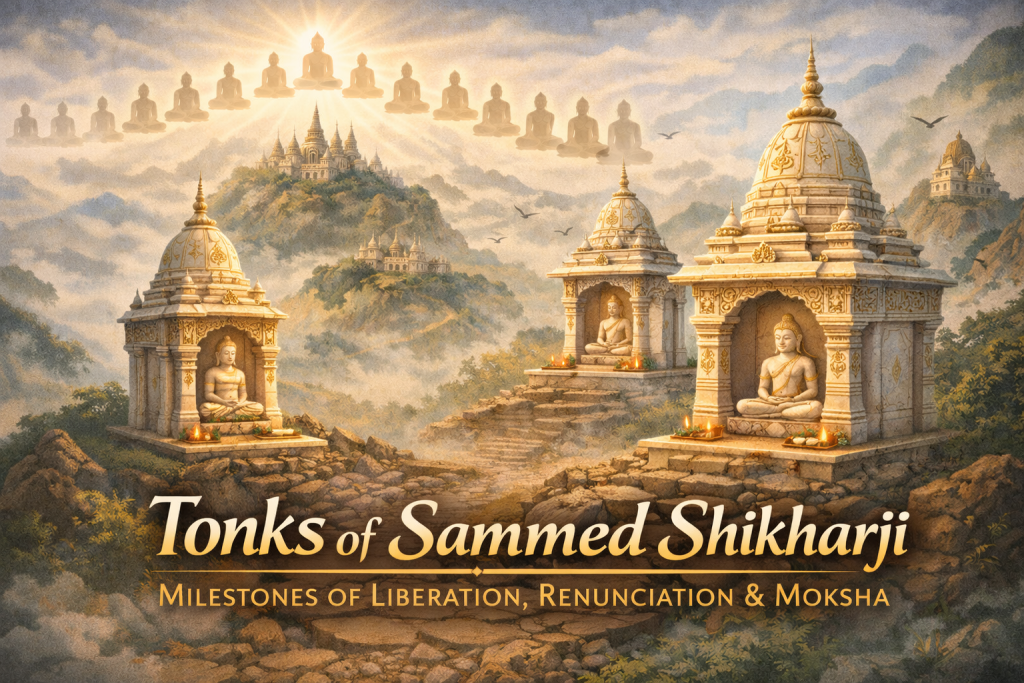
The Tonks of Sammed Shikharji are not merely physical markers on the hill but sacred reminders of the final spiritual attainment of the Tirthankaras. Each Tonk represents the moment of complete renunciation, where karmic bondage ended and the soul attained moksha. Pilgrims pause at every Tonk to offer prayers, meditate, and reflect on the teachings of non-violence, self-restraint, and detachment. Moving from one Tonk to another symbolizes the gradual purification of the soul through spiritual effort and disciplined living.